Electric vs Warm Water Underfloor Heating
Warm floors, no radiators taking up your wall space, and heat that spreads evenly instead of pooling in one corner. That's the appeal of underfloor heating, and it's probably why you're here. The harder question is which type you actually need: electric or warm water.
They heat a room in completely different ways. They cost different amounts to fit and to run. And the right choice usually comes down to a single thing — whether you're warming up an existing room or building from scratch.
We've supplied and fitted underfloor heating for over 30 years, on everything from a single bathroom to five star hotels and the refurbishment of Manchester Town Hall. Here's how the two systems compare, and how to pick the one that suits your project.
The short answer
Heating one or two existing rooms?
Electric almost always wins. It's thin, it goes under nearly any floor finish, and a confident DIYer can lay it in an afternoon — though you'll need an electrician to make the final connection.
Heating a whole house, new build, or large open space?
Warm water is usually the better long-term bet. It costs more to put in, but it's cheaper to run, and it's the natural partner for a heat pump.
That's the decision in two sentences. The detail's below.
What it costs to install
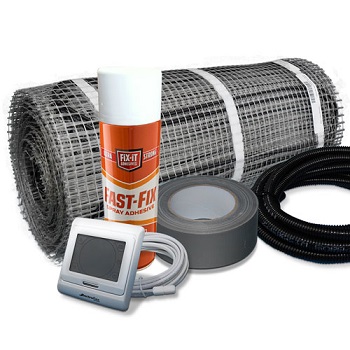
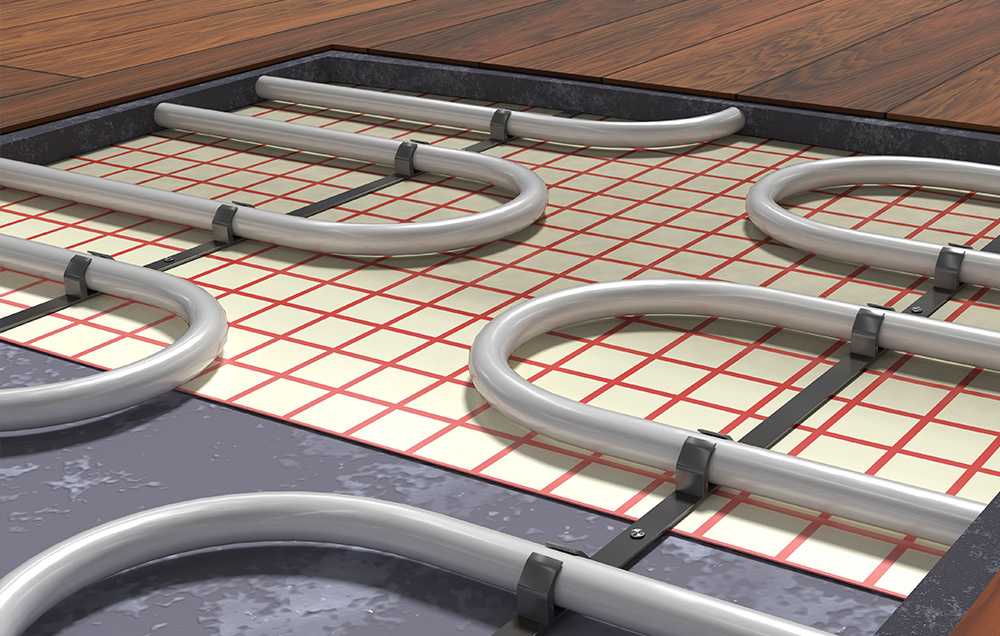
Electric is the cheaper of the two to put in. There's less to it — a mat or cable, a thermostat, and not a lot else. Warm water costs more up front because there's far more involved: pipe, a manifold, a pump, mixing valves, controls, and often a thicker floor build-up.
Our electric mat kits are competitively priced across every floor type, and we can put a warm water system together to suit your build. The install gap between the two is real though, and worth planning around before you commit.
What it costs to run
This is where warm water earns its keep. Because it heats water to a low temperature and spreads it over a large area, it's cheaper to run than electric — especially across bigger floor areas and when it's fed by a modern heat pump.
Electric costs more per unit, so it's best used where you want lovely warm floors in a specific room rather than as the main heat source for the whole house. One exception worth flagging: if you've got solar PV, electric underfloor heating can run partly on power you've generated yourself, which shifts the maths in its favour.
Warm up time and floor height
Electric warms up fast. The mat sits just under the floor finish, so there's barely anything between the element and your feet. Warm water takes longer to reach temperature, particularly in screed, but it holds that heat for longer once it's there — that's the thermal mass working for you.
On height, electric is the thinner of the two. Our low profile warm water system builds up from just 18mm — which is good going for a wet system — but a standard electric mat adds only a few millimetres. For a retrofit where every millimetre of door clearance matters, electric still has the edge.
Side by side
| Feature | Electric | Warm water |
|---|---|---|
| Best for | Single rooms, retrofits, bathrooms | Whole house, new builds, large areas |
| Install cost | Lower | Higher |
| Running cost | Higher per unit | Lower, especially with a heat pump |
| Fit time | Quicker | Longer |
| Floor build-up | Minimal | From 18mm with low profile |
| Heat source | Mains electricity, or solar PV | Boiler, heat pump or biomass |
| Warm up | Fast | Slower, but holds heat longer |
Frequently Asked Questions
What our customers want to know about our underfloor heating
Still weighing it up?
Tell us your floor build and what you're trying to heat, and we'll point you to the right system.
Get in touch