Warm Water Underfloor Heating Insulation & overlay

Insulation, heat spreaders and overlay for faster installation and effective underfloor heating.
Untitled Button
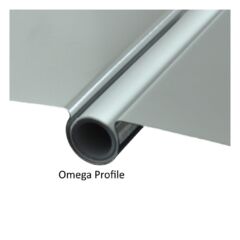
Double aluminium plate 1m x390mm x 0.45mm 16mm pipe
Double aluminium plate 1m x390mm x 0.45mm 16mm pipe

  • £7.12
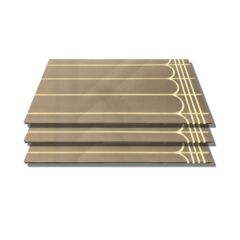
22mm x 1200mm x 600mm 4 Channel Overlay

22mm x 1200mm x 600mm 4 Channel Overlay

  • £22.97
18mm x 1200mm x 600mm 4 Channel Overlay

18mm x 1200mm x 600mm 4 Channel Overlay

  • £20.32
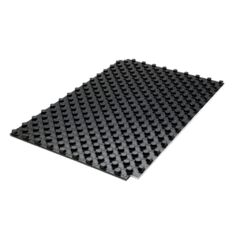
Castellated UFH Panel 0.96m2 16mm Pipe -21mm Thick

Castellated UFH Panel 0.96m2 16mm Pipe -21mm Thick

  • £8.85
Castellated UFH Panel 0.96m2 12mm Pipe- 15mm Thick

Castellated UFH Panel 0.96m2 12mm Pipe- 15mm Thick

  • £8.25


Frequently Asked Questions

What our customers most commonly ask us about

  • What is the purpose of castellated UFH panels?
  • Castellated UFH panels provide a secure method for laying underfloor heating pipes in specific patterns and spacing. Available for both 16mm and 12mm pipes, these panels feature raised studs that hold pipes firmly in place during installation. They're particularly useful for screed installations, eliminating the need for staples or clips. When combined with appropriate controls & wiring, castellated panels help ensure even heat distribution throughout your floor.
  • What are channel overlay boards used for?
  • Channel overlay boards provide a ready-made solution for installing underfloor heating pipes over existing floor surfaces. Available in different thicknesses (18mm and 22mm), these boards have pre-cut channels that accept standard 16mm pipes. They distribute heat evenly across the floor surface and can be laid directly onto most stable, level substrates. This makes them ideal for renovation projects where minimising disruption is important.
  • What's the benefit of the double aluminium plate heat spreader?
  • The double aluminium plate heat spreader enhances heat transfer from pipes to the floor surface. Measuring 1m x 390mm, these plates wrap around 16mm pipes, increasing the contact area and improving thermal conductivity. This results in faster warm-up times and more even heat distribution, particularly beneficial when using timber or low profile systems where maximising heat output is crucial.
  • Is there a difference between 18mm and 22mm overlay boards?
  • Yes, the main differences are thermal performance and floor build-up height. 22mm overlay boards offer slightly better insulation properties, while 18mm boards are preferred when minimising floor height is important. Both accommodate the same pipe diameter and provide similar heat distribution patterns. The choice typically depends on your specific project constraints and whether the installation needs to connect to existing manifolds.
  • How do I prepare my existing floor for overlay boards?
  • Ensure your existing floor is clean, dry, level and structurally sound before installing overlay boards. Any significant unevenness should be addressed with appropriate levelling compound. Remove any dust or debris that might affect adhesion. For wooden subfloors, check for adequate ventilation beneath to prevent moisture issues. Always acclimatise the overlay boards to room temperature for 24-48 hours before installation to minimise expansion or contraction after fitting.